What if the secret to a perfect cup of coffee lies in the maintenance of your coffee maker? Understanding the importance of descaling can transform your brewing experience!
What You Will Learn
- Regular descaling prevents mineral buildup that can affect your coffee maker’s performance.
- Descaling improves the quality and taste of your coffee, leading to a more enjoyable brew.
- Recognizing signs like slow brewing times and unusual noises can help you determine when your coffee maker needs descaling.
- Switching to filtered or distilled water can significantly reduce mineral buildup and enhance your coffee’s flavor.
- A common vinegar-to-water ratio for descaling is 1/3 vinegar to 2/3 water, but this can be adjusted based on your needs.
- Both vinegar and citric acid are effective descaling agents, each with their own advantages.
Importance of Descaling Your Cuisinart Coffee Maker
Descaling your Cuisinart coffee maker is crucial for maintaining its performance and ensuring a flavorful cup of coffee. Over time, mineral buildup from water can affect both the efficiency of your machine and the taste of your brew. This buildup can lead to slower brewing times and, in some cases, even a burnt taste in your coffee. By regularly descaling, you’re not just cleaning the machine; you’re enhancing your coffee experience!
When I first started brewing coffee at home, I underestimated the impact of descaling. After a few months, my coffee started tasting off, and the brewing process took longer than usual. Once I learned about mineral buildup, I made descaling part of my routine, and the difference was remarkable!
Why Descaling is Essential for Coffee Makers
- Prevents mineral buildup that affects performance
- Improves the quality and taste of your coffee
- Extends the lifespan of your coffee maker
Mineral deposits can clog internal components, leading to inefficient heating and brewing processes. For coffee lovers like me, this means not just a longer wait but potentially weaker coffee, too! Additionally, a well-maintained coffee maker can lead to more consistent brewing temperatures, which is essential for extracting the full flavor from your beans. If you’re curious about maintaining other types of coffee makers, you might find our guide on how to clean a drip coffee maker helpful.
Signs Your Cuisinart Coffee Maker Needs Descaling
Knowing when to descale your coffee maker can save you from a disappointing brew. Some common signs include:
- Slow brewing times
- Unusual noises during the brewing process
- Changes in coffee flavor or aroma
If you notice your Cuisinart is taking longer than usual to brew, or if you hear unexpected sounds, it may be time to take action. Trust me, attending to these signs promptly will keep your coffee tasting great and ensure your machine runs smoothly! For more general tips on troubleshooting, check out our article on how to fix a coffee maker.
The Role of Hard Water in Coffee Maker Maintenance
Hard water is a major contributor to mineral buildup in coffee makers. The minerals, like calcium and magnesium, can accumulate and form deposits that hinder your machine’s operation. Using hard water regularly can lead to a coffee maker that not only brews slowly but also produces coffee with an undesirable taste.
To combat the effects of hard water, consider using filtered or distilled water. This small change can make a significant difference in the longevity of your machine and the taste of your coffee. I switched to filtered water a while back, and I’ve noticed a remarkable improvement in both! If your Cuisinart coffee maker isn’t working as expected, our guide on Cuisinart coffee maker not working might offer solutions.
Pro Tip
To enhance your descaling routine, consider running a cycle with plain water after using vinegar or citric acid. This final rinse will help eliminate any lingering taste or odor, ensuring your next cup of coffee is pure and flavorful!
Preparing to Descale Your Cuisinart Coffee Maker
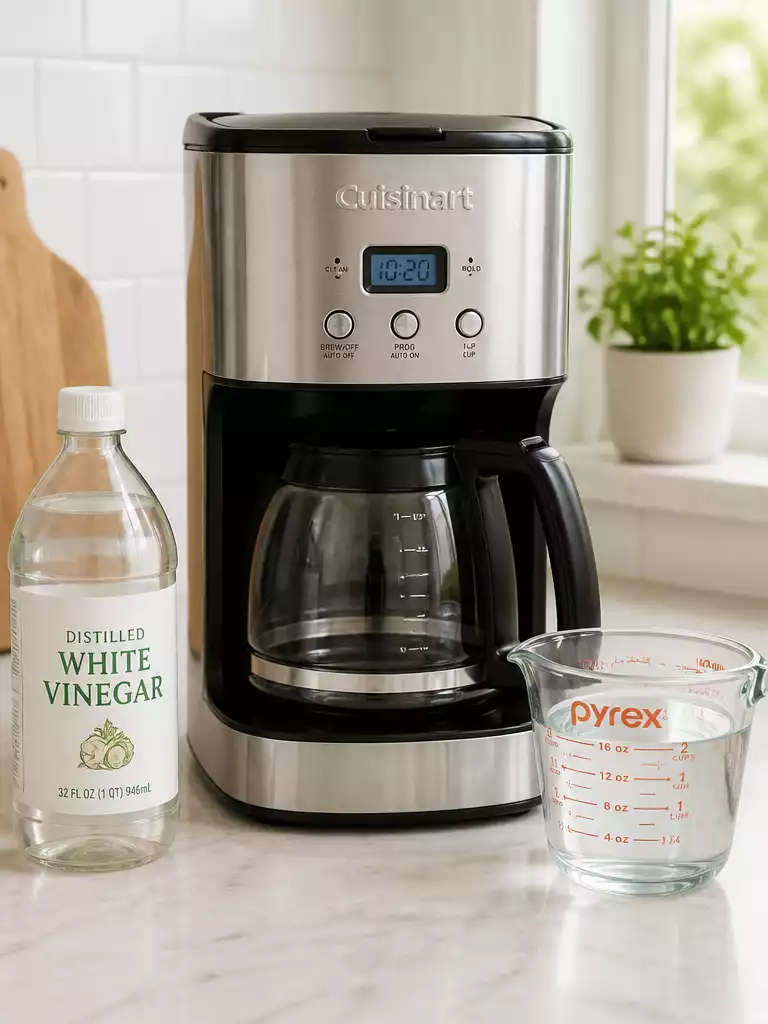
Before diving into the descaling process, it’s crucial to gather all the necessary materials. This will help streamline the process and ensure you have everything on hand. The main items you need include:
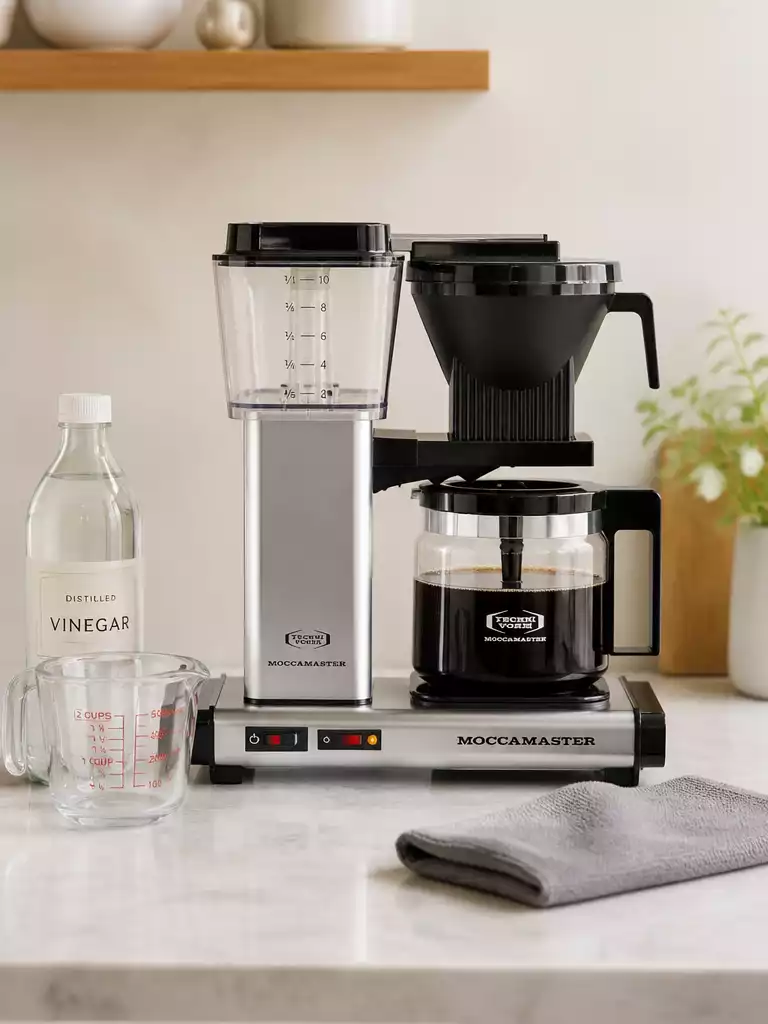
- Distilled white vinegar – an effective natural descaler
- Water – preferably filtered for best results
- A measuring cup for accurate ratios
- A large bowl or carafe to catch the solutions
These essentials will set you up for success and make the descaling process smoother. Don’t forget that using distilled white vinegar is not only effective but also a budget-friendly choice!
Choosing the Right Vinegar-to-Water Ratio
The vinegar-to-water ratio you choose can significantly influence the effectiveness of the descaling process. A commonly recommended ratio is 1/3 vinegar to 2/3 water, which balances cleaning power and minimizes any vinegar residue. However, this can vary based on the specific Cuisinart model you own:
- For standard models: 1/3 vinegar + 2/3 water
- For heavy buildup: 1/2 vinegar + 1/2 water
- For lighter maintenance: 1/4 vinegar + 3/4 water
Feel free to adjust these ratios based on your experience. Just remember, the goal is to effectively dissolve any mineral buildup without damaging your coffee maker.
Exploring Alternative Descaling Solutions: Vinegar vs. Citric Acid
When it comes to descaling your Cuisinart coffee maker, you might wonder if there are alternatives to vinegar. Citric acid is a popular option, and both have their strengths. Here’s a quick comparison:
- Vinegar: Great for tackling tough mineral deposits, affordable, and widely available.
- Citric Acid: Often leaves less odor, can be more effective at breaking down certain types of buildup, and is less abrasive.
Ultimately, the choice depends on your preference. I personally lean towards vinegar, as it’s what I’ve always used! Both methods are effective, so you can’t go wrong with either choice.
Frequently Asked Questions About Descaling Your Cuisinart Coffee Maker
- Q: Why is descaling my Cuisinart coffee maker important?
- A: Descaling is crucial for preventing mineral buildup, which can affect your coffee maker’s performance, lead to slower brewing times, and negatively impact the taste of your coffee. It also helps extend the lifespan of your machine.
- Q: How often should I descale my Cuisinart coffee maker?
- A: The frequency depends on your water hardness and how often you use the machine. Generally, descaling every 1-3 months is recommended. If you notice signs like slow brewing or unusual noises, it’s time to descale sooner.
- Q: What are the signs that my coffee maker needs descaling?
- A: Common signs include slower brewing times, unusual noises during operation, and a noticeable change in the flavor or aroma of your coffee (e.g., a burnt or off-taste).
- Q: Can I use tap water for descaling?
- A: While you can use tap water, filtered or distilled water is preferred. Hard water, which often comes from the tap, contributes to mineral buildup, so using it for descaling means you’re fighting the problem with its own cause. Using filtered water minimizes new mineral deposits.
- Q: What is the recommended vinegar-to-water ratio for descaling?
- A: A common recommendation is 1/3 white vinegar to 2/3 water. This ratio provides effective cleaning power while minimizing residual vinegar taste. For heavy buildup, you might use a 1:1 ratio, and for lighter maintenance, 1/4 vinegar to 3/4 water.
- Q: Is citric acid a good alternative to vinegar for descaling?
- A: Yes, citric acid is a very effective alternative to vinegar. It tends to leave less odor and can be particularly good at breaking down certain types of mineral buildup. Both are excellent choices, so the preference often comes down to personal taste and availability.
Recap of Key Points
Here is a quick recap of the important points discussed in the article:
- Descaling is essential to prevent mineral buildup, improving performance and coffee quality.
- Signs that your coffee maker needs descaling include slow brewing times and changes in flavor.
- Using filtered or distilled water can help reduce mineral buildup and enhance coffee taste.
- Gather necessary materials like distilled white vinegar and water before descaling.
- The recommended vinegar-to-water ratio is typically 1/3 vinegar to 2/3 water, adjustable based on buildup.
- Both vinegar and citric acid are effective descaling solutions, each with its own advantages.

Pingback: How to Reset a Keurig Coffee Maker: Complete Guide